Plans & PricingSignup for Free

ClicData Pivot Table: Improvement & New Features !

Anna Walteron July 18, 2014

We want to help you go deeper into analyzing the data through Pivot Tables by introducing those new features.  

Conditional Formatting

Let’s assume we have a pivot table showing the Advertising Costs for some car models by year:
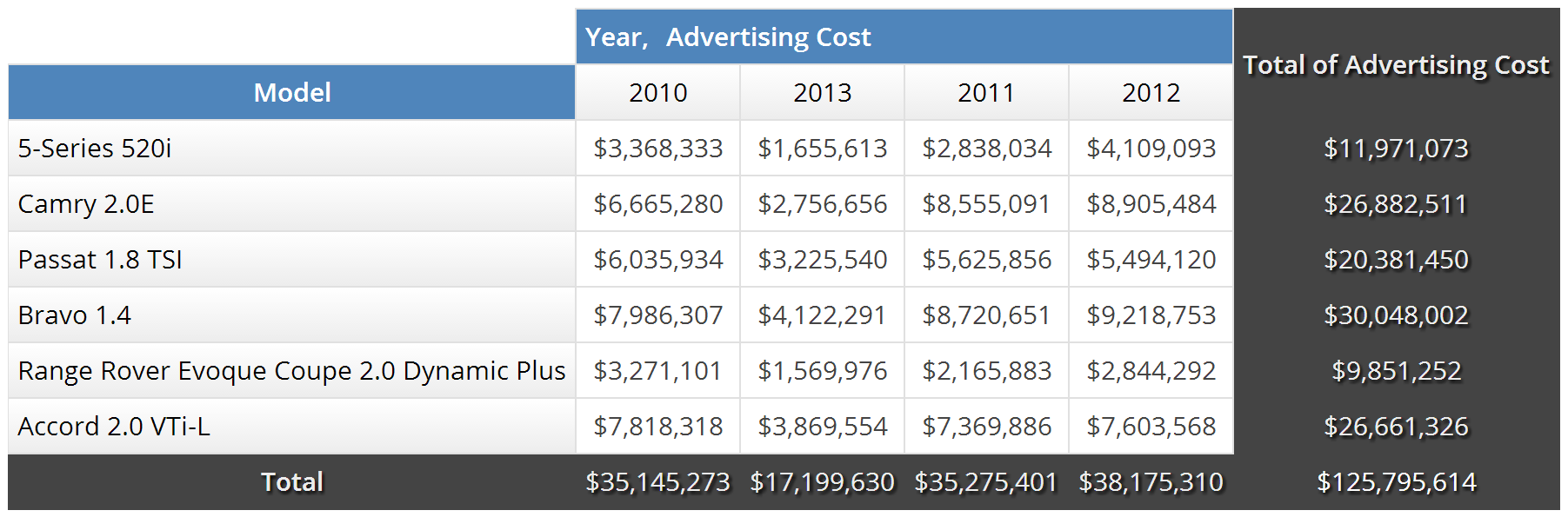
WO Cond Form

A good table design should allow the user to understand the data by just having a quick look at the table.

By accessing the table PropertiesConditional Formatting option,  we can highlight the numbers that are within some ranges defined by the user and set up some formatting options (Font, Color, Size). Therefore, we will understand which Car Models the company spent more money on Advertising throughout the years. So, what do you think about the new table?
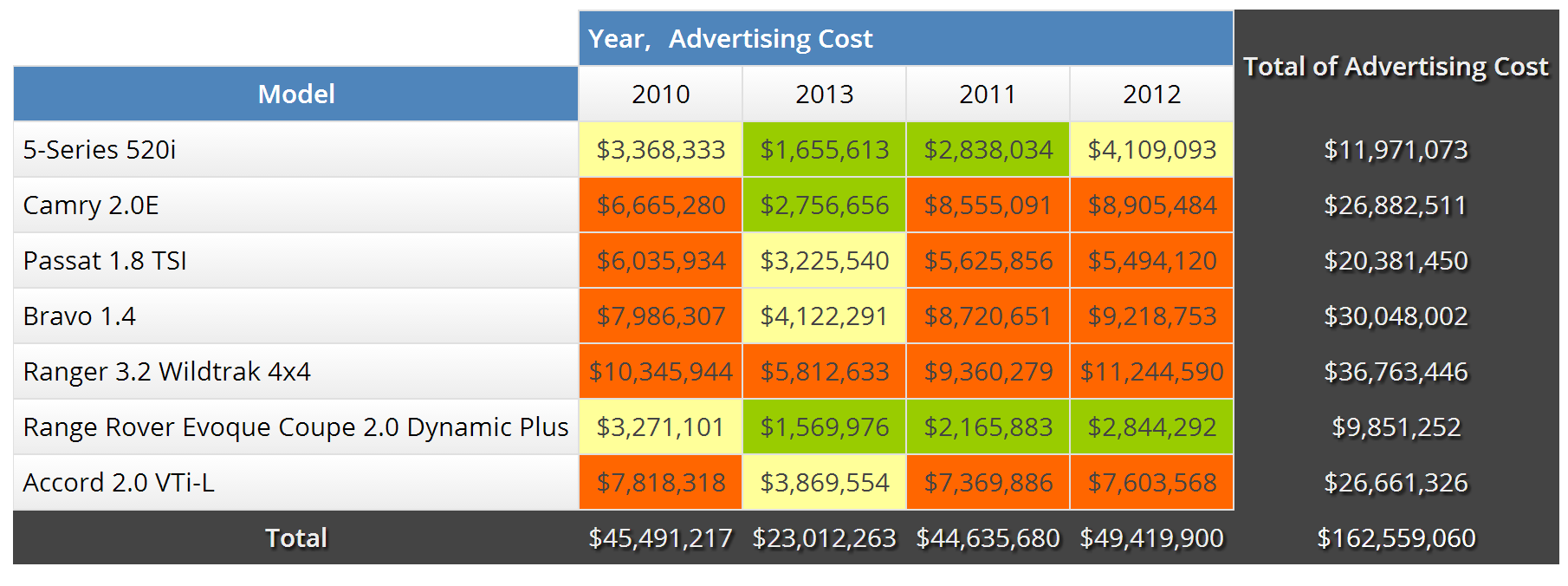
With Cond Form

Calculated Column

Furthermore, by accessing the table PropertiesValuesAdd a calculated column feature you can quickly create another indicator for your Pivot Table. No need to go back to the Data Transformation Section!

 For example, we want to see how many transactions were done for a car model, by country, for a specific price. We just have to count the different TransactionId using the formulas editor (value(‘TransactionId’, ‘dcount’) ), name the new column and add it in the Values Section of the Pivot Table.
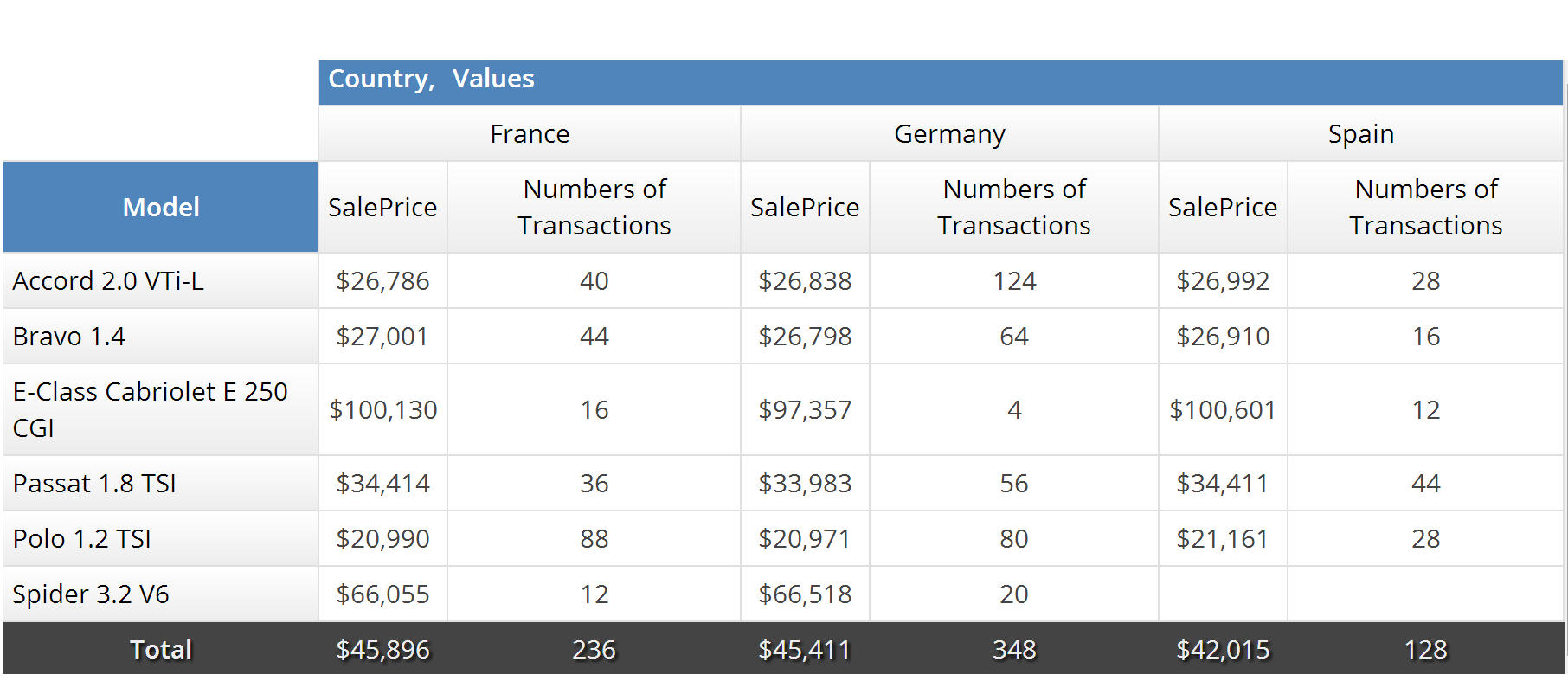
Calc field (2)

Hope this is useful! Click on the images to access the Dashboard!

Table of Contents

Share this Blog

Other Blogs

Data Contracts and Lineage for BI Teams: The Infrastructure Behind Dashboard Trust

Dashboards don't break because of bad charts. They break because nobody agreed on what revenue means, and the pipeline feeding it changed two weeks ago without telling anyone. That's the…

A Chart Chooser for BI Teams: Stop Guessing, Start Deciding

The wrong chart doesn't just look bad, it changes what people believe the data says. When a trend appears flat on a pie chart or a comparison gets buried in…

Why AI Fails without Data Engineering

Industry reports suggest that as many as 80% of AI projects fail to deliver anticipated value. This failure rarely stems from the AI models themselves, but from fundamental issues such…
All articles
We use cookies.
We use necessary cookies to make our site work. We'd also like to use optional cookies which help us improve our the site as well as for statistical analytic and advertising purposes. We won't set these optional cookies on your device if you do not consent to them. To learn more, please view our cookie notice.

If you decline, your information won't be tracked when you visit this website. A single cookie will be used in your browser to remember, your preference not to be tracked.
Essential Cookies
Required for website functionality such as our sales chat, forms, and navigation. 
Functional & Analytics Cookies
Helps us understand where our visitors are coming from by collecting anonymous usage data.
Advertising & Tracking Cookies
Used to deliver relevant ads and measure advertising performance across platforms like Google, Facebook, and LinkedIn.
Reject AllAccept