In today’s accelerated marketplace, dashboards give you more control, accuracy and impact to steer your enterprise wisely. But if your data sources are rife with error, complexity, and duplication, the effectiveness of your reports and insights will be degraded no matter how elegant your dashboards may look.
The value of building a foundation of sustainable, reliable data systems cannot be overstated.
When enterprise data is sourced from a variety of platforms, in a variety of applications, using a variety of naming structures, inconsistency can be expected. Data can be considered ‘messy:’ it is not consistent or organized sufficiently to be able to deliver the power and insights expected of it.
The inconsistencies may have occurred due to entry errors, corruption during transmission, or by the simple fact that different departments may use different names, field definitions or abbreviations for what is otherwise the same information. Whatever the cause, the performance of any insights derived from it will be less than optimal.
Other challenges to large data sets include having too much data to work with, ultimately causing a loss of focus on the metrics that feed actionable insights. Thirdly, data is ineffective if it is out of date and doesn’t actually deliver information that is relevant to the issues at hand.
The solution for messy data is, not surprisingly, data cleansing. The process involves detecting a variety of faults in the data, such as incomplete, duplicate, irrelevant or inaccurate data elements and correcting the errors. Once it’s run through the process, the data is consistent and uniform. Insights generated from it can be considered reliable and reports and results will be much more on-target.
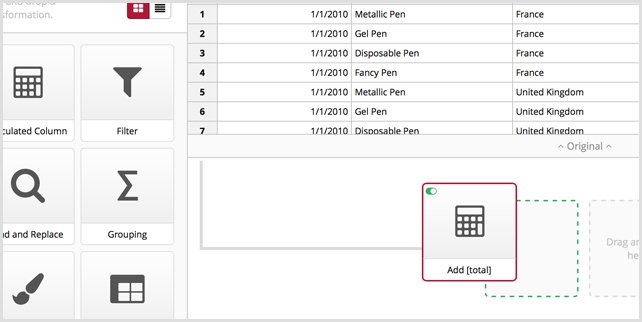
Since your data sources are rarely clean, ClicData gives you ways to easily standardize your data before it populates your dashboards. Our Standardize and Normalize features clean your data, create consistent naming conventions and delete empty fields. About as easy to accomplish as “find-and-replace,” your data will quickly be at its most efficient.
Get the performance, security and accessibility you seek with your dashboards. Do more with ClicData.